Connect with others who understand.

  •   Learn from expert-reviewed resources
  •   Real advice from people who’ve been there
  •   People who understand what you’re going through
Sign Up Log In
Powered By
Real members of MyEczemaTeam have posted questions and answers that support our community guidelines, and should not be taken as medical advice. Looking for the latest medically reviewed content by doctors and experts? Visit our resource section.
A MyEczemaTeam Member asked a question 💭
Christchurch, NZ

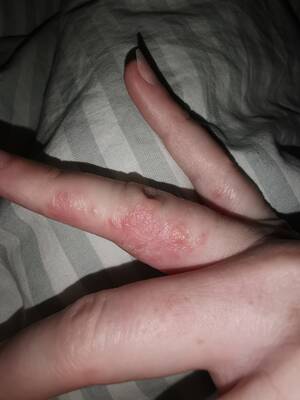
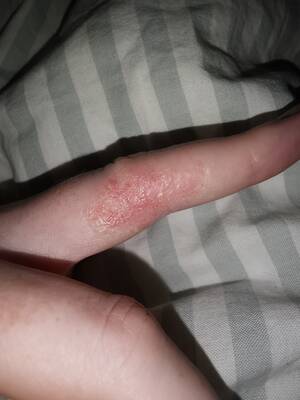
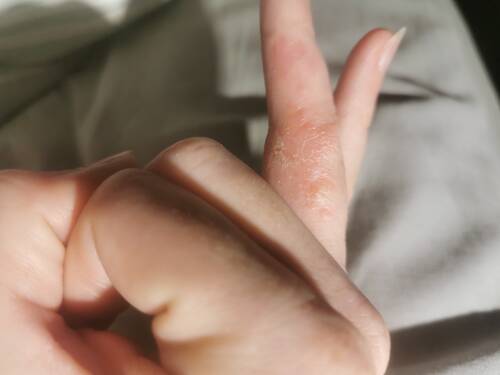
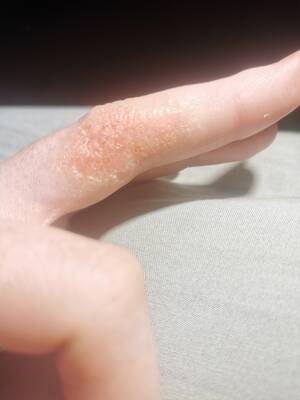
Hi! I have suspected Dyshidrotic eczema since my daughter was born 2yrs ago. Only on my hands. Initially it was quite bad on my knuckles in a large patch, wasn't overly itchy. Now it's localised on some fingers. I have been using a steroid cream, pimecrolimus 1% cream and paraffin. It got better for a while but recently (last 4 months ish) it has become intensely itchy, throbbing and swollen with some crusting. I've continued with the creams and covering in bandaids for parts of the day. I've… read more
March 23 (edited)
 · 
Reactions
MyEczemaTeam

Is your dyshidrotic eczema infected?

Based on your symptoms, it's possible your eczema has become infected. The intense itching, throbbing, swelling, and crusting you're experiencing are common signs of infected eczema.

Key signs that suggest infection include
* Increased swelling beyond your usual eczema
* Crusting on the Show Full Answer

Is your dyshidrotic eczema infected?

Based on your symptoms, it's possible your eczema has become infected. The intense itching, throbbing, swelling, and crusting you're experiencing are common signs of infected eczema.

Key signs that suggest infection include:
* Increased swelling beyond your usual eczema
* Crusting on the skin (especially yellow or honey-colored)
* Worsening pain or throbbing
* The area feeling warmer than usual
* Fluid oozing from affected areas

The fact that your symptoms have worsened despite continuing your usual treatment creams could also indicate infection, as infections can reduce the effectiveness of standard eczema treatments. It's important to contact your healthcare provider or dermatologist soon. They can examine your hands and determine if you have a bacterial, viral, or fungal infection. If it is infected, they'll likely prescribe antibiotics or other medications to treat the infection alongside your eczema management.

In the meantime, try to avoid scratching as much as possible, even though it's intensely itchy. Scratching can worsen the infection and introduce more bacteria into broken skin.

You're doing the right things by protecting your hands with gloves and avoiding excessive water exposure. Keep up those protective measures while you seek medical attention.

March 23

Related Questions

View All
A MyEczemaTeam Member asked a question 💭
Zanesville, OH

A MyEczemaTeam Member asked a question 💭
Great britain