
Powered By



7 Key Differences Between Eczema and Athlete's Foot
Learn key differences between eczema and athlete's foot, including causes and treatments.
00:00:00:00 - 00:00:26:11
Voiceover
Your feet are itchy and peeling. Is it eczema or athlete's foot? Let's break down seven key differences. One, athlete's foot is contagious. Eczema isn't. Fungus causes athlete's foot. You can catch it in places like locker rooms. On the other hand, eczema is not something you can catch from other people. Number two, they affect different people. Athlete's foot is more common in adults, especially men.
00:00:26:13 - 00:00:52:27
Voiceover
Eczema often starts in childhood and can run in families. Number three, they show up on different parts of the body. Athlete's foot usually appears between the toes. Eczema on the feet is more likely on the soles or sides. Number four, athlete's foot and eczema are diagnosed differently. Athlete's foot may need a skin test or biopsy. Eczema is usually diagnosed by checking your symptoms and health history.
00:00:53:00 - 00:01:26:29
Voiceover
Number five, they need different treatments. Athlete's foot requires antifungal medicine. To treat eczema, health care providers suggest moisturizers and in some cases, medication. Six, athlete's foot heals fast. Eczema lasts longer. With treatment, athlete's foot can clear up in weeks. Eczema is a chronic condition that comes and goes. Seven, prevention is different for athlete's foot. Keep your feet clean and dry, and wear shoes or sandals when walking in areas like public showers and locker rooms. With eczema,
00:01:27:01 - 00:01:42:07
Voiceover
avoid triggers and keep skin moisturized. Still unsure about the differences between athlete's foot and eczema? Talk to your healthcare provider for the right diagnosis and treatment. Learn more and connect at MyEczemaTeam.com.
People with eczema are familiar with itchy, inflamed skin. Athlete’s foot — a common rash on the feet — can also cause irritation and itching. When your feet are itchy and inflamed, it can be hard to tell what’s causing it — even if you’ve had eczema for years.
“My fingers and the bottom of my feet have itched all night. Wearing shoes has been terrible. I thought it was athlete’s foot at first,” one MyEczemaTeam member shared.
Both athlete’s foot and eczema can cause itchy, sometimes painful rashes, as well as cracked and peeling skin. So, when you develop an itchy rash on your feet, how exactly can you tell which condition you have?
Athlete’s foot is a contagious fungal infection caused by dermatophytes — the same fungi that cause ringworm. It’s also known as tinea pedis — “tinea” meaning “ringworm” and “pedis” meaning “foot.” This common condition affects about 70 percent of people at some point in their lives.
Eczema is a chronic (ongoing, or long-term), noncontagious skin condition. Doctors aren’t sure what causes eczema. It may result from a gene variation, weakness in the skin barrier (the outer layer of skin), an inflammatory response, or other causes.
The fungi that cause athlete’s foot thrive in warm, humid conditions, such as damp socks. Athlete’s foot spreads through direct (skin-to-skin) contact or via contact with a skin flake or contaminated surfaces, such as shoes and towels. Common places to contract athlete’s foot include locker rooms and saunas. Cleveland Clinic notes that males and people aged 60 or older have a higher risk of developing athlete’s foot.
Eczema may run in families. It’s particularly common in infants and children. According to the National Eczema Association, approximately 80 percent of people with atopic dermatitis — the most common form of eczema — will have symptoms before they’re 6 years old. Eczema is associated with other immune system conditions, like allergies and asthma. For example, more than half of children with severe atopic dermatitis will develop asthma.
Dyshidrotic eczema, also called pompholyx or vesicular eczema, shows up as tiny, fluid-filled blisters. This type of eczema typically affects the palms, soles of the feet, and sides of the fingers. It’s most common in those ages 20 to 50 but can develop at any age.
Researchers still don’t know the cause of dyshidrotic eczema. However, you may be at increased risk if you smoke, are undergoing radiation therapy, or have:
Exposure to different irritants, including allergens, may trigger eczema flares (a sudden worsening of symptoms). Common triggers include:
Common symptoms of athlete’s foot include itchiness, burning, and stinging. The way athlete’s foot looks can change depending on the type of infection — toe web, vesicular-type, moccasin-type, or ulcerative. Athlete’s foot may appear as:
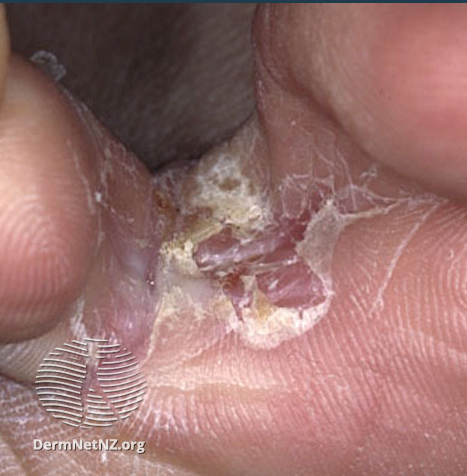
Eczema often looks like:
After initial itchiness, dyshidrotic eczema may cause small blisters, which can be extremely itchy and painful. These blisters may grow larger and typically last a few weeks. If you have this type of eczema frequently, you may also notice:

The location of eczema can vary depending on age and other factors. Children under 2 often develop atopic eczema on the cheeks, stomach, arms, and legs. Adults typically see it on the face, hands, and neck and in the folds of the elbows and knees. However, different types of eczema can affect any part of the body. Dyshidrotic eczema, for example, usually appears on the palms, soles, and sides of the fingers.
Typically, your healthcare provider diagnoses athlete’s foot with a symptom history and a foot exam. Some people need to be tested. If necessary, your provider will perform a biopsy, removing a tiny piece of skin for lab testing.
Your general healthcare provider can diagnose eczema with a physical exam and by asking questions about your health and symptom history. Mention any contact you’ve had with potential irritants.
Before making the diagnosis, your healthcare provider will rule out other causes of your rash, including autoimmune diseases, allergic contact dermatitis, and athlete’s foot.
Diagnostic testing for eczema may include:
When one member of MyEczemaTeam experienced eczema on their feet, they asked, “Can I use athlete’s foot cream on my eczema? It’s prescription cream.”
Since eczema on the feet and athlete’s foot have similar symptoms, it may be tempting to treat them with the same products. However, these conditions have different causes and need different treatments.
Athlete’s foot is typically treated with topical antifungals (over-the-counter or prescription). You can find topical antifungals in many forms, including:
Alternatively, your healthcare provider may prescribe oral antifungal medications (pills) to treat your athlete’s foot.
Other ways to manage athlete’s foot include:
You can treat eczema with daily applications of moisturizers and ointments, such as petroleum jelly. For infants, eczema can be managed with gentle bathing, moisturizing, and other at-home practices.
Prescription treatments for eczema include:
Side effects of prescription treatments can vary, so it’s important to ask your doctor about any you might experience.
To treat dyshidrotic eczema, apply moisturizing cream or lotion every day. Other options include:
If an area affected by eczema becomes infected, treatment will depend on the type of infection.
With the right diagnosis and treatment, athlete’s foot should resolve within one to eight weeks. As your athlete’s foot begins to heal, symptoms such as itchiness will become less bothersome. However, it’s important to complete your prescribed treatment. Stopping treatment early can cause your athlete’s foot to come back in a harder-to-treat form.
Many children outgrow eczema. For others, eczema is an ongoing condition — symptoms flare and improve over time. Your healthcare provider can help you find the most effective long-term therapy.
You can help prevent athlete’s foot by practicing good foot hygiene:
You can help prevent eczema flare-ups by moisturizing daily after bathing. Your healthcare provider may also suggest avoiding:
For more information on preventing flare-ups, read about the itch-scratch cycle of eczema.
The tips mentioned earlier for managing general eczema also apply to dyshidrotic eczema. In addition, your healthcare provider may recommend the following measures:
It’s important to know when to seek medical advice for athlete’s foot and eczema, especially if symptoms persist or worsen. Here’s when to consult your healthcare provider for each condition.
For athlete’s foot:
For eczema, call your healthcare provider if:
If you’re unsure about your symptoms or if your treatment isn’t helping, reach out to your healthcare provider. They can help you find the right way to treat your condition and prevent it from getting worse. Receiving the right care early on can make a big difference in managing your symptoms and improving your comfort.
MyEczemaTeam is the social network for people with eczema and their loved ones. On MyEczemaTeam, members come together to ask questions, give advice, and share their stories with others who understand life with eczema.
Are you living with eczema? Have you ever had eczema on your feet and weren’t sure how to treat it? Share your experience in the comments below, or start a conversation by posting on your Activities page.
Get updates directly to your inbox.



 Continue with Facebook
Continue with Email
Continue with Facebook
Continue with Email
Continue with Facebook
Continue with Email
Continue with Facebook
Continue with Email
Become a member to get even more





 Join
Join



 Your Privacy Choices

This is a member-feature!
Sign up for free to view article comments.
Picture here of soles of feet is palmarplantar pustular psoriasis
We'd love to hear from you! Please share your name and email to post and read comments.
You'll also get the latest articles directly to your inbox.